 Kuddle . Love . Delivered .
 Golden
Retriever
 Labrador
Retriever
 German
Shepherd
 Beagle
 Shih Tzu
 Rottweiler
 Boxer
 Indie / Desi

 Persian
 Maine Coon
 British Shorthair
 Bengal
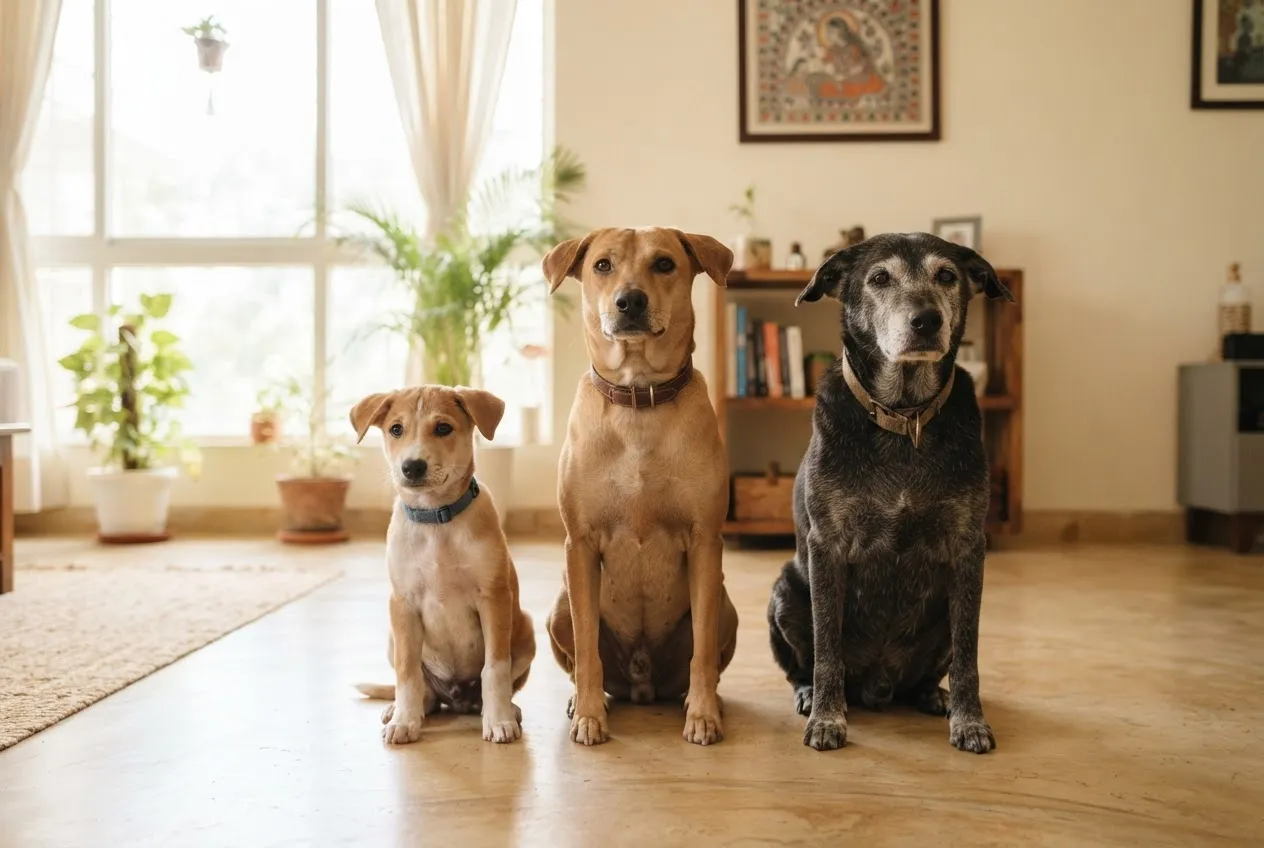
Walk down any pet food aisle and every pack promises the same thing: a healthy, happy dog. The truth is simpler. The right food depends on three things about your dog: how old they are, how big they will get, and how they live. Get those three right and most of the choice makes itself.
1. Start with age
Dogs need different food as they move through life. Packs usually say which stage they are made for: puppy (or junior), adult, or senior.
- Puppies grow fast and need more calories, more protein and the right balance of calcium and phosphorus for bones. Most small and medium breeds eat puppy food until about 12 months. Large and giant breeds grow for longer and usually stay on puppy food until 15 to 24 months.
- Adults need food that keeps them at a healthy weight. This is the longest stage of life, and the easiest to get wrong by overfeeding.
- Seniors (often from about 7 years, earlier for giant breeds) move less and can gain weight easily. Senior foods are usually a little lower in calories and may add joint support.
2. Then size and breed
A Pomeranian and a German Shepherd do not eat the same way. Size changes how much energy a dog burns for its weight, and even the kibble that is comfortable to chew.
- Small breeds burn energy fast for their size. They do well on energy-dense food in small kibble, fed in two or three meals.
- Medium breeds and most Indies do well on a good all-round adult food.
- Large and giant breed puppies need food made for them. Growing too fast stresses their joints, so large-breed puppy food controls calories and calcium.
- Large adults benefit from food that supports joints and keeps weight in check, since extra kilos are hard on hips and elbows.
3. Look at how your dog lives
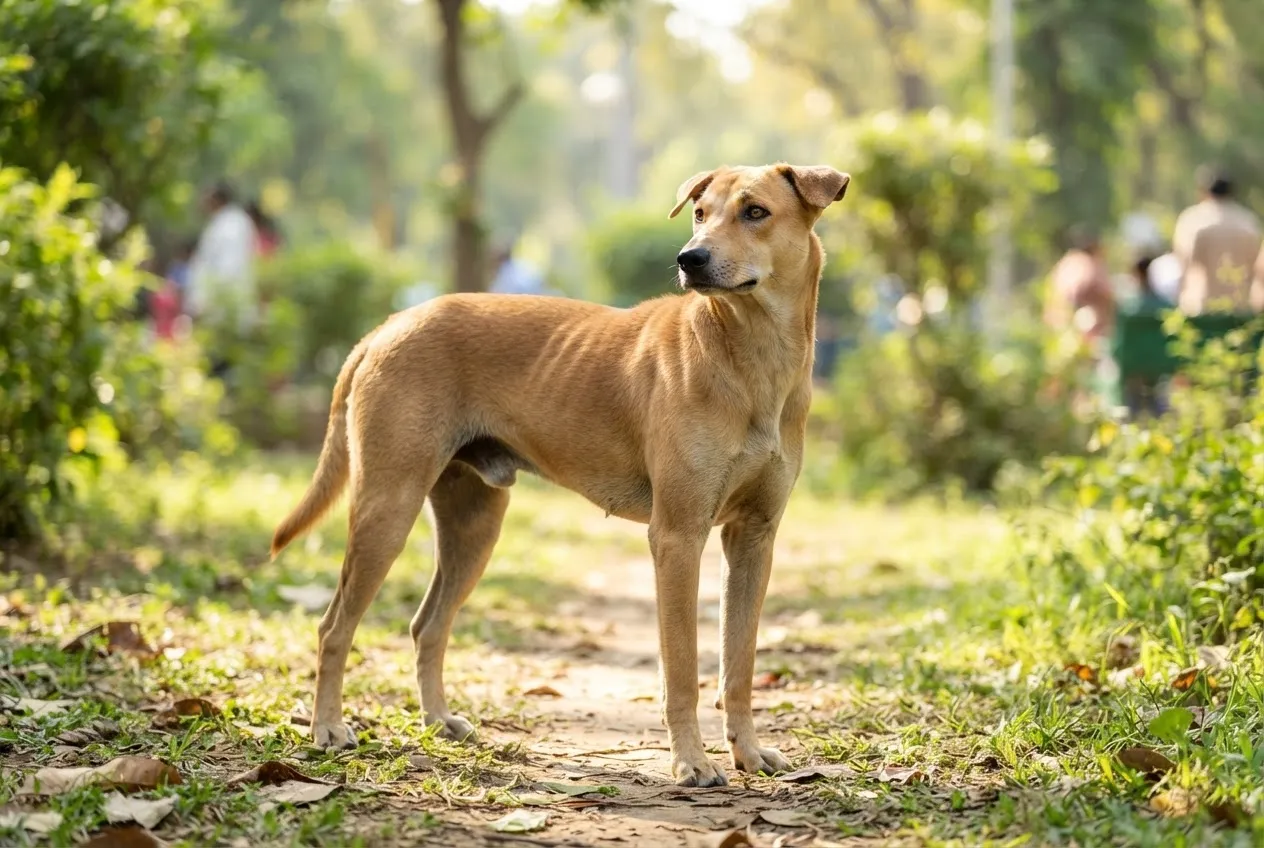
Two dogs of the same age and breed can need very different amounts. A working farm dog or a dog that runs every morning needs more energy than an apartment dog who sleeps through the afternoon.
- Very active dogs: higher protein and fat, or simply a bigger portion.
- Couch dogs: a lighter food, or a smaller portion, and fewer treats.
- Neutered and spayed dogs often need around 10 to 20 percent fewer calories.
4. Read the label like a pro
You do not need a nutrition degree. Check four things on the back of the pack.
- A named protein near the top of the ingredient list, such as chicken, lamb or fish.
- A statement that the food is complete and balanced for your dog's life stage. Without it, the food is a treat or a topper, not a meal.
- A feeding guide by weight. Use it as a starting point, not a rule.
- The manufacturing and expiry dates, the MRP and the maker's or importer's details.
Dry or wet?
Both can be complete and balanced. Dry food is easy to store, good value and helps you measure portions. Wet food is tasty, very filling for the calories and adds water, which helps in Indian summers and for dogs that do not drink much. Many parents mix the two: dry as the base, a spoon of wet on top.
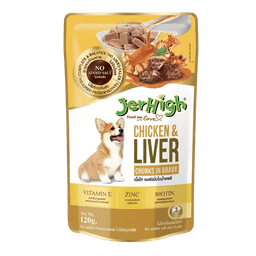 Chicken And Liver in Gravy Dog Wet Food 120gm, 12 pack₹720
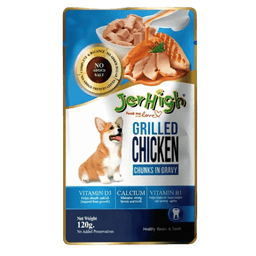 Grilled Chicken in Gravy Dog Wet Food, 12 pack₹720
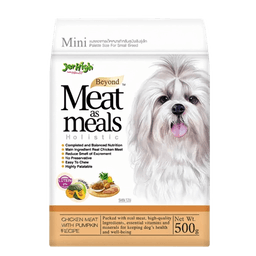 Meat as Meal Chicken with Pumpkin 500gm, 1 pack₹880
 Meat as Meals Chicken Recipe, 12 pack₹1,215
How much to feed
Start with the pack's guide for your dog's weight, then watch the dog, not the chart. Run your hands along their side: you should feel the ribs easily under a thin layer, and see a waist from above. If you cannot, cut the portion by about 10 percent. If the ribs stick out, add a little.
Switching foods without an upset tummy
Change food slowly over about a week, so the gut can adjust.
- Days 1 and 2: three parts old food, one part new.
- Days 3 and 4: half and half.
- Days 5 and 6: one part old, three parts new.
- Day 7: all new.
Loose stools for a day are common. If your dog vomits, stops eating, or has diarrhoea for more than a day or two, slow down and call your vet.
When to ask your vet first
Talk to a vet before choosing food if your dog has a skin problem, a sensitive stomach, kidney or liver trouble, diabetes, or is pregnant or nursing. These dogs often need a specific diet, and the right one makes a real difference.